How it works

The update, without the grind.

Foldout doesn't replace your judgment. It removes the part that eats your time — turning what you already know into a clear, on-brand update your investors will actually read.

01

Bring what's happening.

Paste the shorthand, bullet points, or rough call notes you already have. No format required. Occupancy, the financials, the note about the roof — messy is fine.
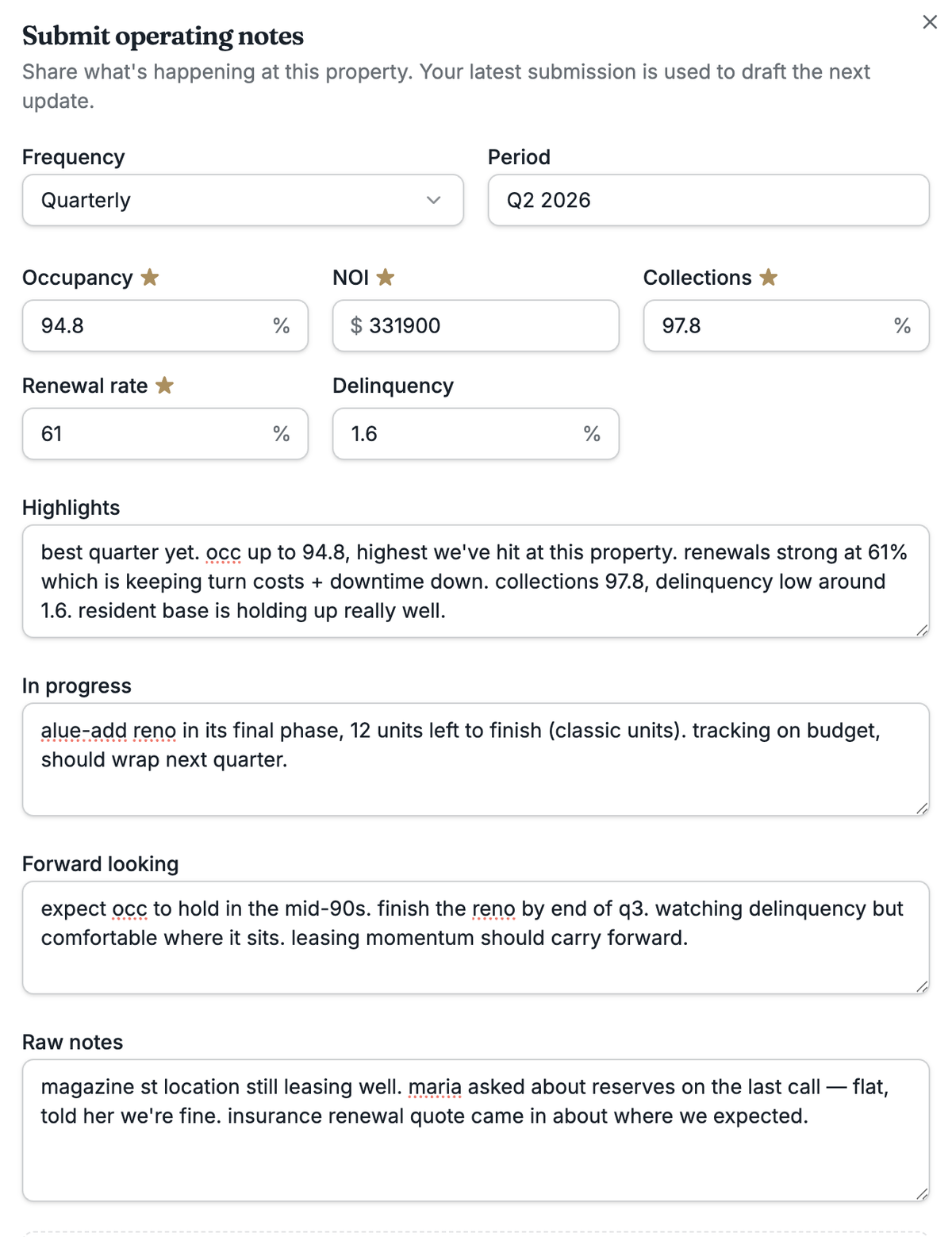
Foldout operating-notes intake form
02

Foldout drafts it in your voice.

Foldout assembles a structured update that reads the way you write. It never invents a number, and when you edit and regenerate, your edits are kept, not overwritten.
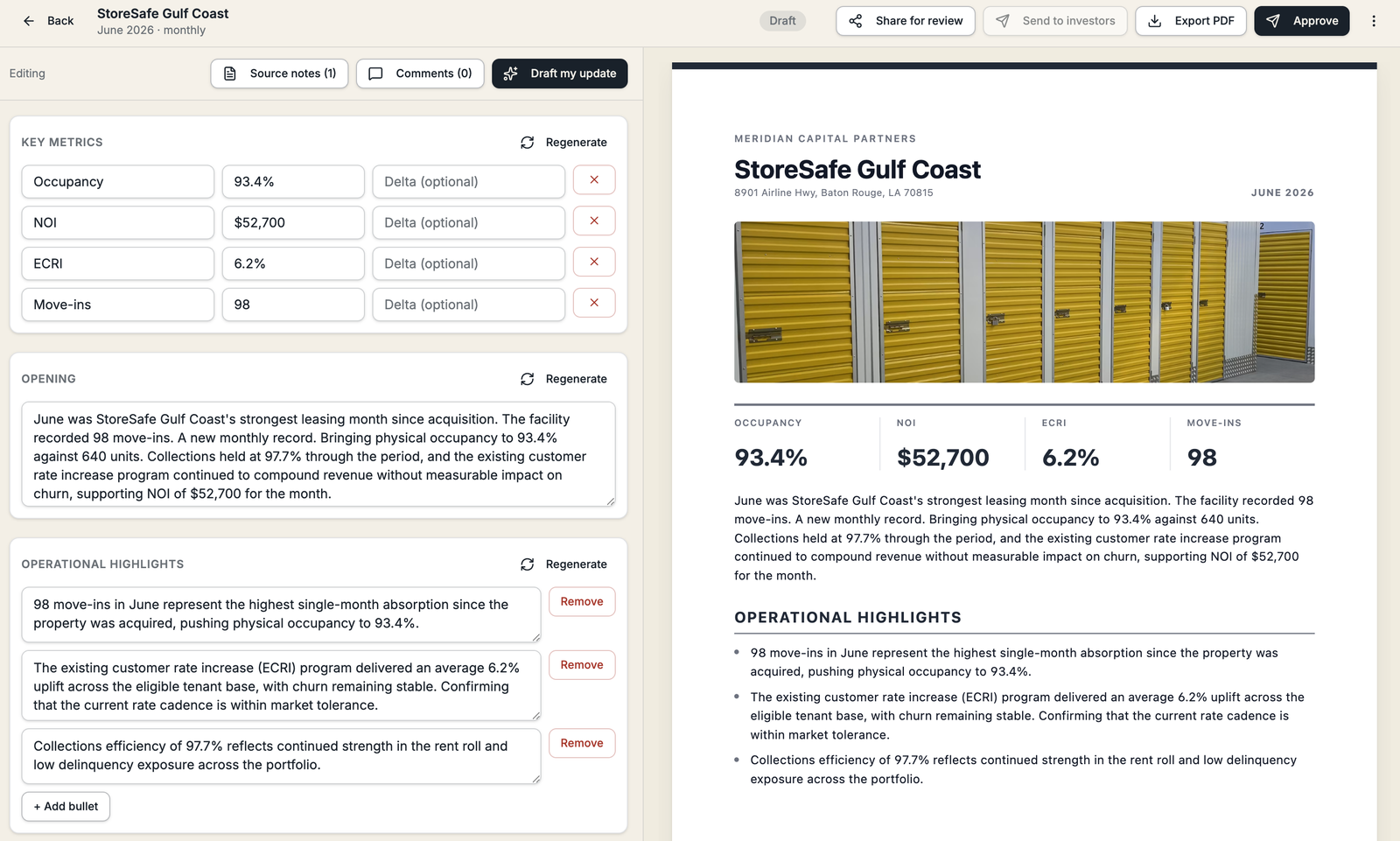
Foldout draft editor with the branded investor-update preview
03

Share for review.

Send a private review link to your team or co-GPs, collect their comments in one place, and fold their feedback in before anything is finalized.
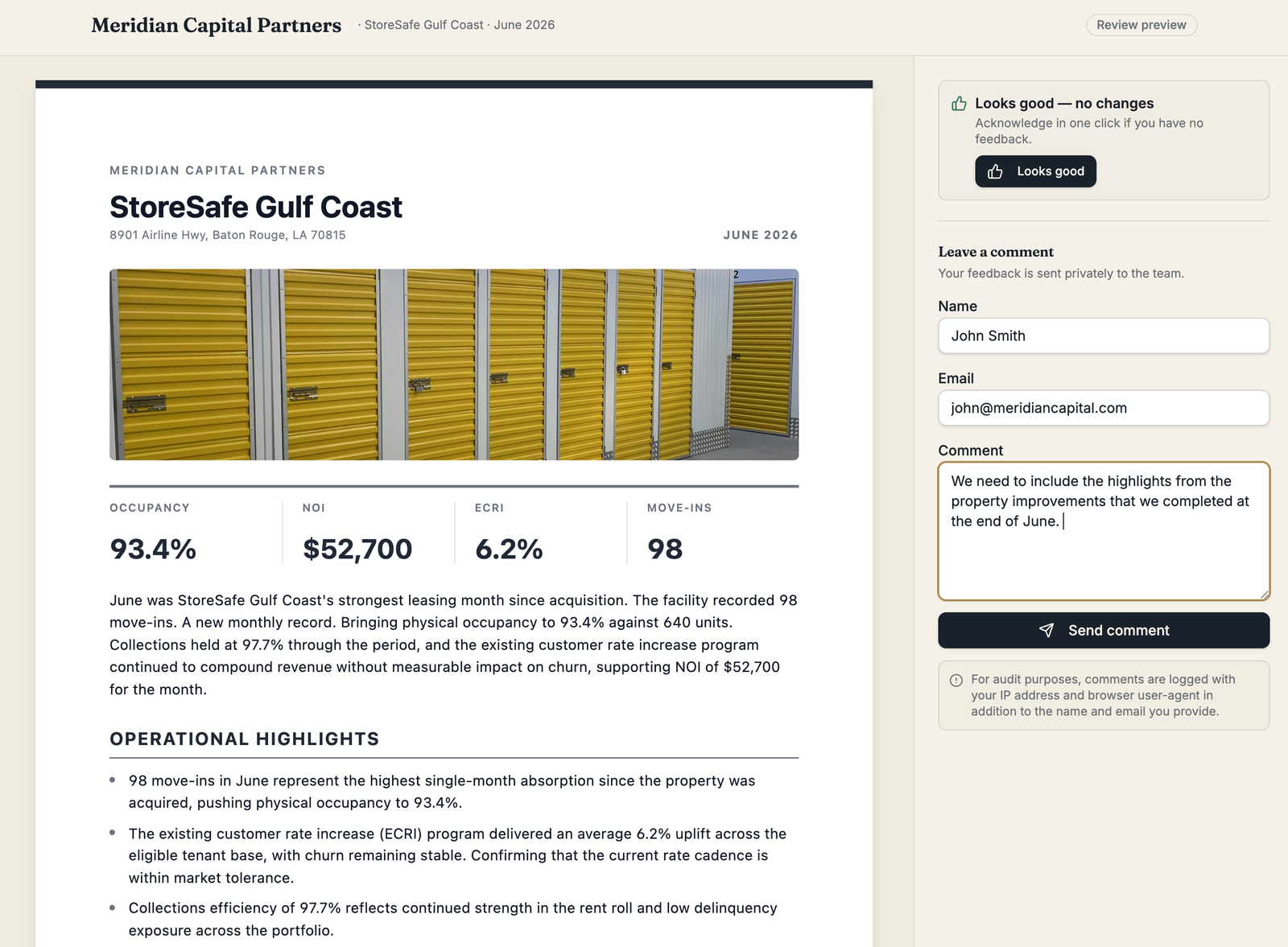
Foldout review page with the investor comment panel
04

Send it to your investors.

Send the finished, on-brand update to your investor list right from Foldout, or export it as web or PDF. Either way it goes out on your firm's letterhead. Foldout never appears to your investors.
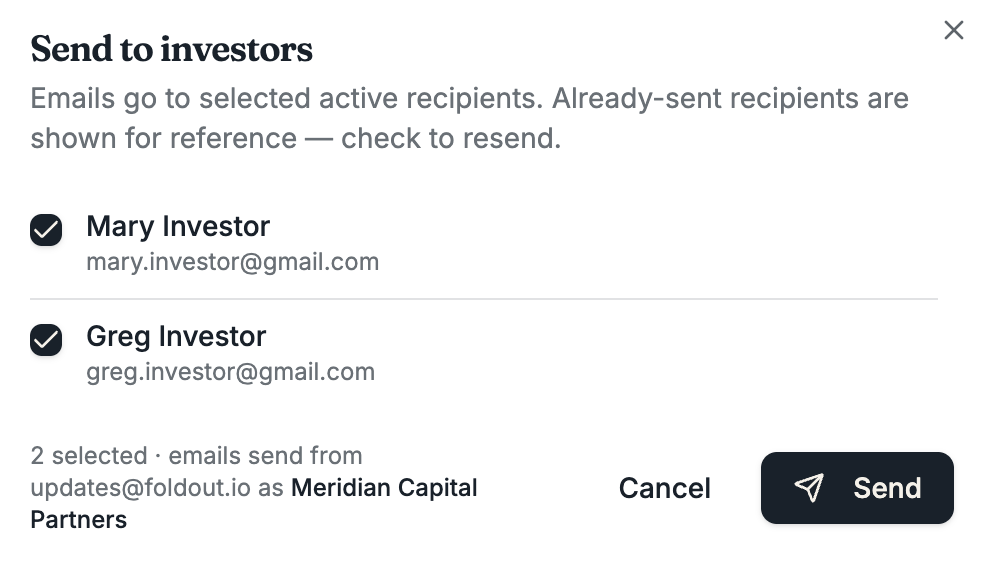
Foldout send-to-investors dialog
Between updates

The numbers keep moving between letters.

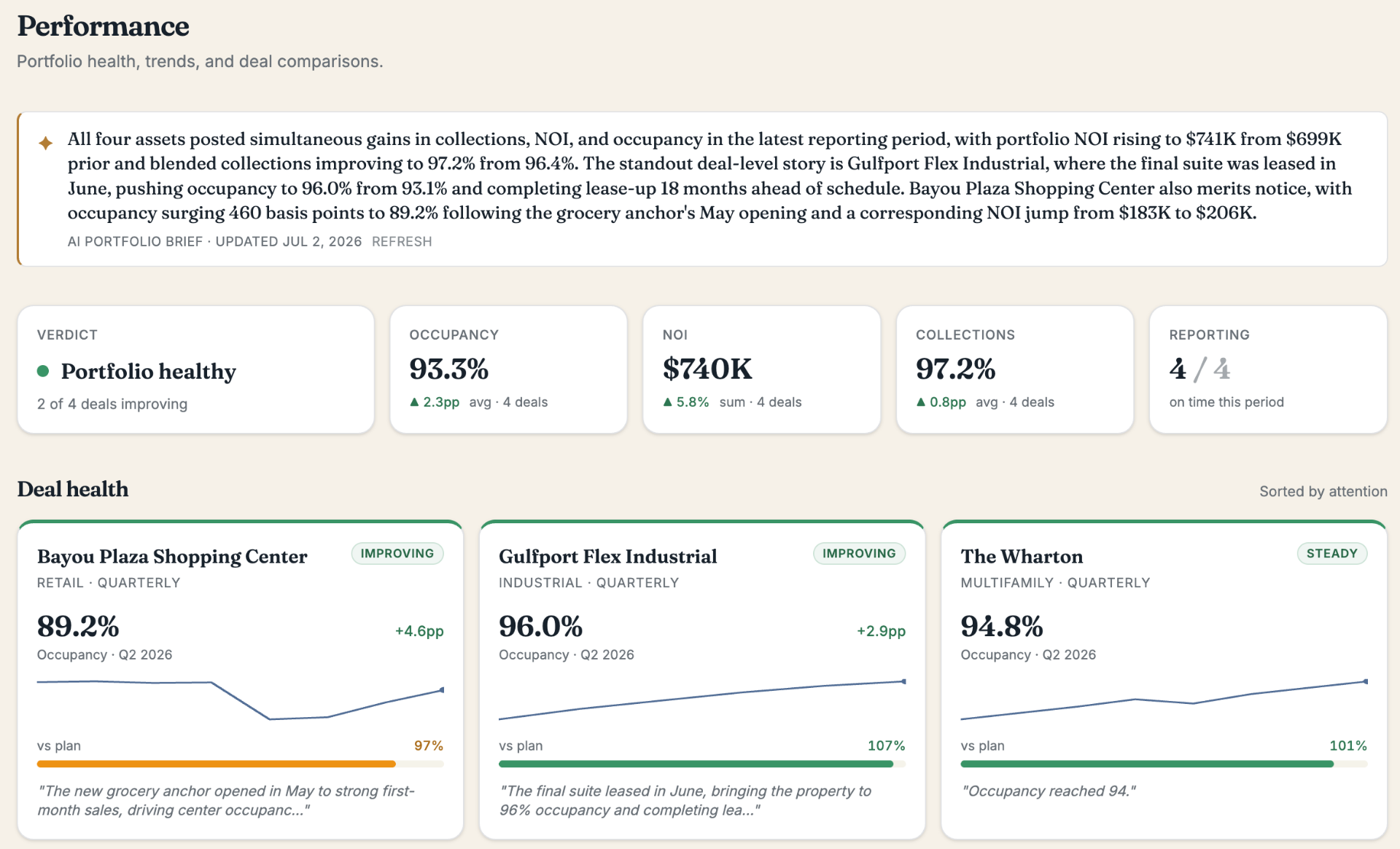
Foldout tracks every deal quarter to quarter, so the trends and the trouble spots are already there when it's time to write, and the day an investor calls. Occupancy, NOI, collections, and delinquency, each measured against the plan you set.

Every deal in one place, sorted by what needs you.
Foldout performance dashboard showing portfolio health, the AI portfolio brief, and deal-health tiles
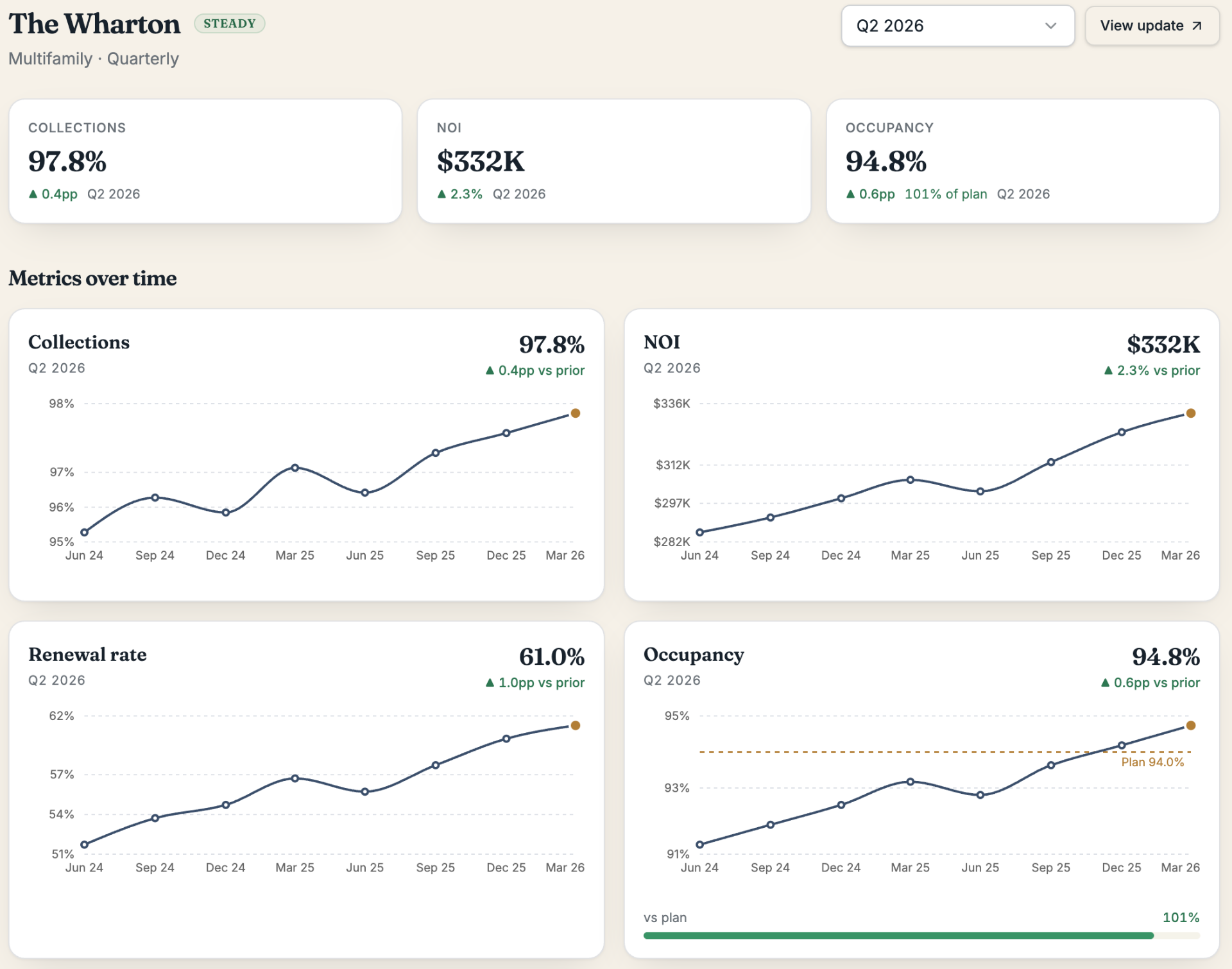
Open any deal to see how it's trending.
Foldout property detail view with a deal's collections, NOI, renewal rate, and occupancy charted over time
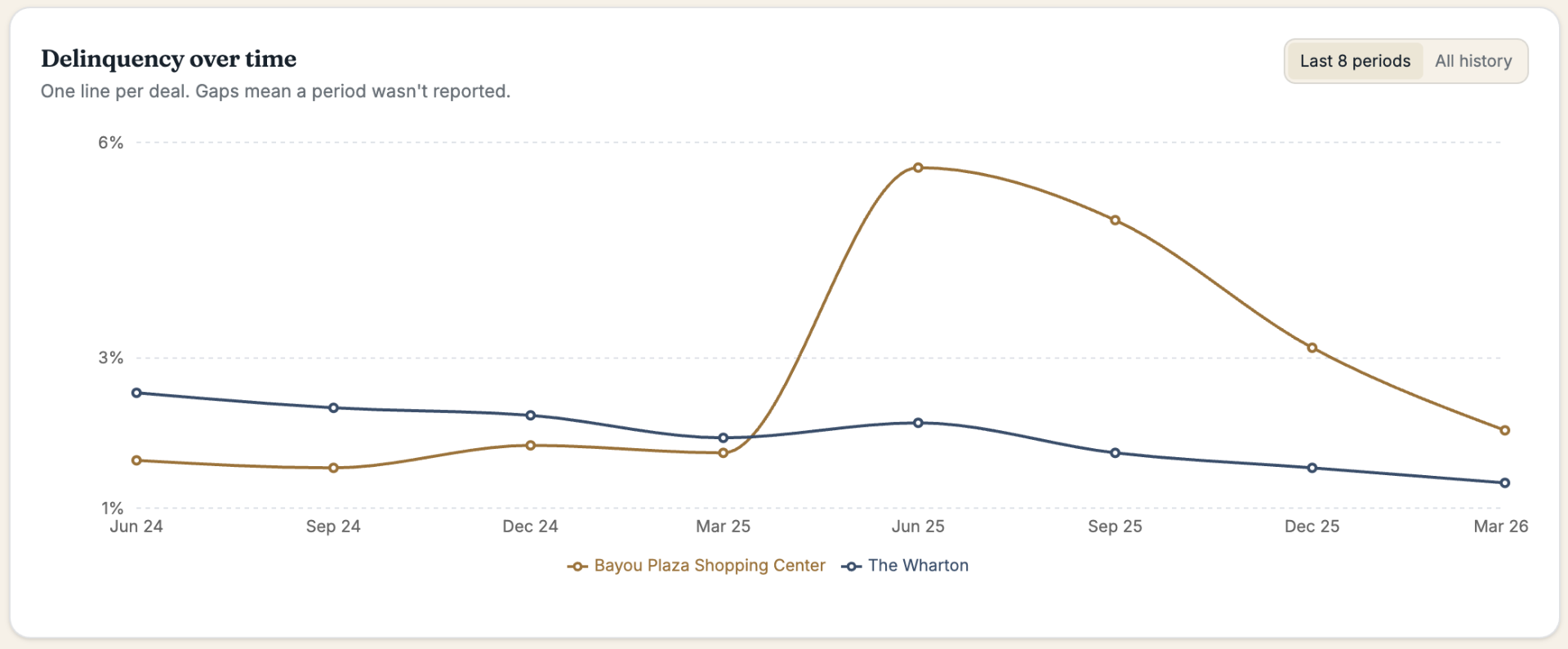
Put deals side by side on any metric.
Foldout chart comparing delinquency across deals over time
Compounding

Every update makes the next one better.

Because Foldout learns from what you've already sent, the work compounds. Your second update is easier than your first, your voice gets sharper, and your investors get a consistent story they can trust over the life of the deal.